
Updated September 2026. Choosing a contractor in DHA Karachi should begin with evidence, scope and accountability—not the lowest headline rate. A weak contractor decision can create delays, variation claims, poor waterproofing, hidden MEP defects and finishing problems that are expensive to correct later.
This checklist is designed for owners building, rebuilding or renovating in DHA Karachi. It focuses on practical due diligence. Project-specific DHA approvals, statutory requirements, contracts and safety obligations should be verified against current official requirements and with appropriate professionals before work begins.
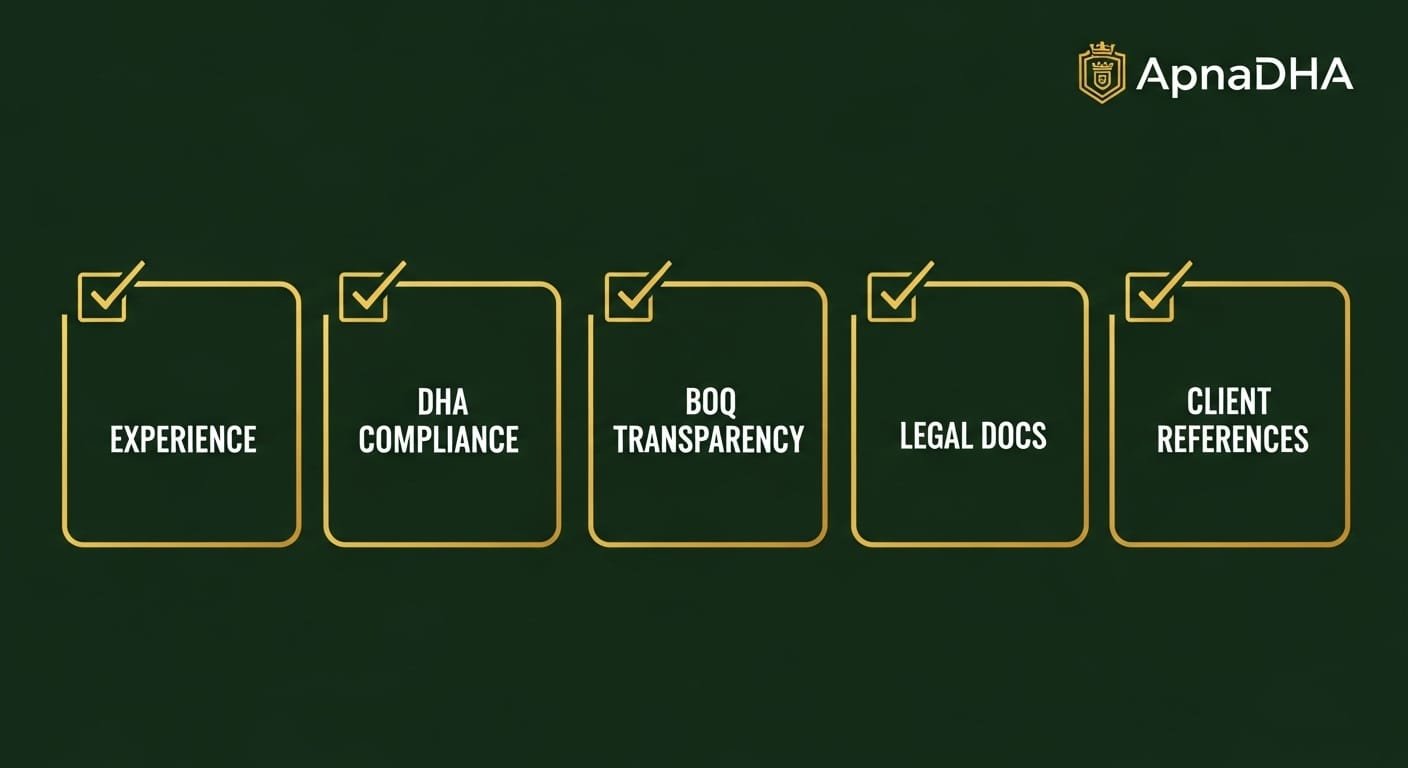
Table of Contents
Contractor in DHA Karachi: What to Verify First
- Relevant completed projects of similar size and complexity.
- Recent client references you can contact directly.
- Site-management structure and who supervises daily work.
- Business identity, tax/business documentation where applicable, and payment account details.
- Ability to work from drawings, specifications and a measurable BOQ.
- Clear process for changes, approvals, billing and quality checks.
1. Visit Completed and Ongoing Projects
Portfolio photographs are not enough. Visit at least one completed project and, where possible, an active site. Look at structure, plaster, waterproofing details, MEP coordination, tile alignment, woodwork, site cleanliness and the quality of supervision.
Ask past clients about delays, variations, communication and post-handover defects—not only whether the house looked good on completion.
2. Define the Scope Before Asking for Price
Quotes are only comparable when the scope is comparable. Decide whether the contractor is pricing:
- Labour only.
- Grey structure with material.
- Grey structure + MEP.
- Turnkey construction through finishing.
- Renovation with partial demolition.
- Selected trades only.
Use the Construction Cost Per Sq Ft in DHA Karachi and House Finishing Cost guides to understand what should sit inside the scope.
3. Compare BOQs, Not Lump-Sum Headlines
A good quotation should make it possible to understand quantities, specification, inclusions, exclusions and provisional items. Be cautious when a low rate is achieved by leaving major items vague or outside the quoted scope.
| BOQ area | What should be clear |
|---|---|
| Structure | Concrete, reinforcement, masonry, plaster and relevant scope |
| Waterproofing | Areas, system and responsibility |
| Electrical | Point schedule, cables, DB/protection and major loads |
| Plumbing | Pipe system, drainage, fixtures and testing |
| Finishing | Material allowances, installation and exclusions |
| Woodwork | Material, hardware, finish and measured scope |
4. Agree How Variations Will Be Priced
Construction changes happen. The agreement should explain who can authorise a variation, how quantity or rate changes are valued and when the owner receives the revised cost impact. Verbal changes are a common source of disputes.
5. Payment Milestones Should Follow Verified Work
There is no universal payment percentage that suits every contract. Link payments to clearly defined, measurable milestones and retain enough leverage for snagging and unresolved work. Large front-loaded advances increase owner risk unless they are tied to documented mobilisation or material procurement.
6. Put Material Specification in Writing
A phrase such as “A-grade material” is too vague. The contract or specification should define performance, brand/range where appropriate, thickness/size and approved alternatives. Brand names should not replace technical specification; good products can still fail when installed badly.
Related technical guides: Electrical Lighting Checklist, Plumbing Services and Window Types & Costs.
7. Inspect Work Before It Gets Covered
Many expensive defects are hidden by later work. Plan inspections before concrete pours, before plaster covers conduits/pipes, before waterproofing is tiled over and before false ceilings close services.
Use the Construction Quality Checklist as a buyer/owner reference, and involve qualified engineers or specialists for structural, electrical or other technical sign-off where appropriate.
8. Communication and Reporting
- Regular progress photographs and site notes.
- Written record of owner decisions and variations.
- Updated programme when delays occur.
- Material-delivery and billing records.
- Snag list and close-out status before final handover.
9. Contract Terms Need Professional Review
The written agreement should cover scope, drawings/specification precedence, programme, payment, variations, site responsibilities, delay handling, insurance/safety where applicable, defects, termination and dispute resolution. Do not rely on a generic template for a high-value build; obtain appropriate legal/professional advice for the actual contract.
10. Handover Is a Process, Not One Final Payment
- Prepare a room-by-room snag list.
- Test plumbing, electrical, pumps and installed equipment.
- Collect relevant drawings, manuals, warranties and supplier information.
- Record outstanding defects and deadlines.
- Close retention/final payment only in line with the agreed contract.
Red Flags When Choosing a Contractor
- Refuses access to completed or ongoing projects.
- Cannot explain inclusions/exclusions in the quotation.
- Pushes for major undocumented advance payment.
- Uses vague material terms with no specification.
- Discourages independent inspection.
- Cannot identify who supervises the site.
- Relies on guaranteed completion, ROI or resale claims instead of a project programme.
Need Construction or Property Guidance?
ApnaDHA does not label a contractor “verified” merely because they appear in an article. Owners should carry out their own due diligence. For builder research, see Home Builders in DHA Karachi. Buyers can Post a Property Requirement; owners and agents can List Property. For direct marketplace help, WhatsApp 0331-8208177.